Insights /October 15, 2026 /3 min read
Entering the Indonesian Market: How to Localize Your Brand Without Losing It
Translation is not localization. How to keep your brand truth while adapting the proof for one of the world's most diverse markets.
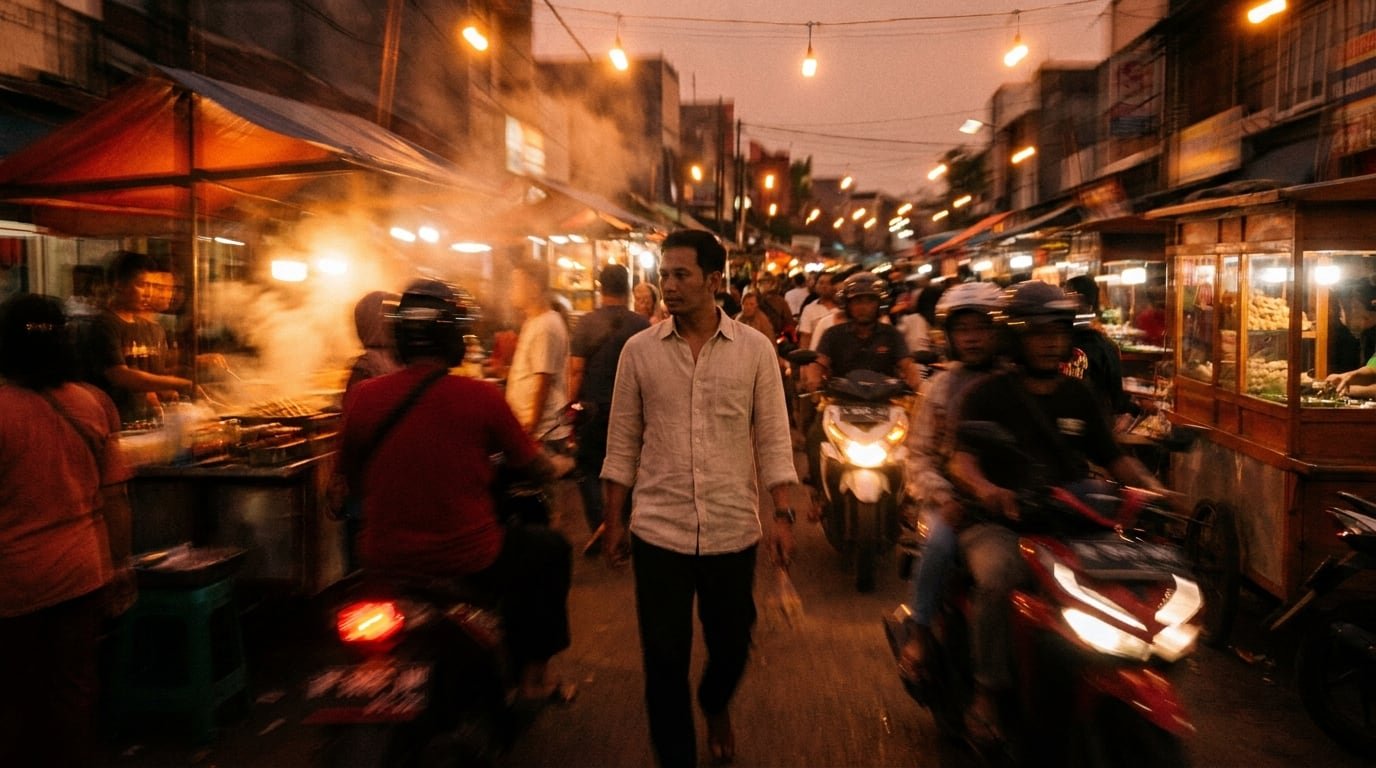
Indonesia is one of the largest consumer markets in the world, and one of the easiest to misread from a distance. Many international brands arrive with a strong identity and a translated website, then wonder why the brand feels distant. The issue is rarely the logo. It is usually the gap between what the brand says and how people here actually live, shop and talk.
This guide covers how to localize a brand for the Indonesian market while keeping what makes it yours.
Translation is not localization
Swapping English copy for Bahasa Indonesia while keeping the same messaging is, as one marketer who has run campaigns in the country puts it, “just a costume change” (Marketing-Interactive). Audiences notice quickly. Localization asks a different question: what does this brand mean here, and what proof would make people believe it?
Keep the brand truth, localize the proof
The most useful rule we know comes from the same discussion: keep the brand truth consistent, but localize the proof. Your positioning, values and core identity should travel. The evidence you show, the stories you tell and the way you appear in daily life should feel made for Indonesia.
In practice that can mean:
- Local collaborations and limited editions instead of a new logo
- Photography with Indonesian people, places and light, not stock imagery from another market
- Product names, flavours or formats adapted to local habits
- A tone of voice that sounds natural in Bahasa Indonesia, not translated
Indonesia is many markets
Seventeen thousand islands, hundreds of ethnic groups and very different cities make “the Indonesian consumer” a misleading idea. Research on regional consumer behaviour has long shown meaningful differences between cities, for example in how much shoppers in Surabaya and Jakarta respond to brand image (Campaign Asia). Before launch, decide which cities and audiences matter first, and design for them specifically.
Respect faith and food norms
Indonesia has the world’s largest Muslim population, and halal expectations shape food, beverage, cosmetics and personal care. Beyond certification, they influence imagery, ingredients you highlight and even the timing of campaigns around Ramadan and Lebaran. A brand that treats this as a compliance checkbox will feel foreign. A brand that understands it can become part of family rituals.
Heritage is a strength here
Indonesian consumers often prefer domestic brands in food and beverage, and many global brands are assumed to be local because they have been around for decades (Campaign Asia). Familiarity and story carry weight. We see this in our own work: Sosis Paskali leans on a homemade recipe dating back to 1983, and Ayam Simpang Siliwangi on flavours served since 2003. For a newcomer, the lesson is to earn familiarity through presence, partners and consistency rather than claim it.
Design for where people actually meet your brand
For many Indonesian consumers the first touchpoint is not your website. It is a social feed, a marketplace listing, a delivery app, a mall pop-up or a cup in someone’s hand. Make sure the identity works at small sizes, on busy screens and on physical objects. A cafe brand like Imago Hills lives as much on takeaway cups and bags as on its storefront.
A localization checklist
- Is the brand name easy to say and free of unwanted meanings in Bahasa Indonesia and major regional languages?
- Does the tone of voice sound native, not translated?
- Are imagery, colours and symbols appropriate across religions and regions?
- Which cities and audiences are you launching in first?
- What local proof will you show: partners, editions, people, places?
- Does the identity work on social, marketplaces and packaging, not only on your site?
Working with a local studio
A local studio cannot replace your strategy, but it can pressure-test it. At CCnC we start every project with Context, which for international brands means understanding Indonesian audiences before design begins. Our studio is in Bandung, with offices in Jakarta and Surabaya. If you are preparing to enter the market, talk to us about your launch.
More Insights
View all
Oct 16, 2026 /EN /Identity Design
Brand Mascots That Work: Designing a Character People Want to Talk About
A logo cannot wave, joke or apologize. A good brand character can. How to design one that works across feeds, packs and chats.

Oct 16, 2026 /EN /Industries
F&B Branding in Indonesia: What Makes a Cafe Brand Memorable
Good coffee is the entry ticket. What makes people return, recommend and photograph a cafe is often the brand.

Oct 16, 2026 /EN /Brand Strategy
Brand Architecture for Holding Groups: Branded House or House of Brands?
When one brand becomes many, how should they relate? The three common models and how to choose, with examples from wellness and hospitality.